
Chilov Island: Azerbaijan’s Hidden Caspian Treasure and Its Untapped Tourism Potential
An island, a sea, a century of history and a destination waiting to be discovered. Located in the Caspian Sea, Chilov Island represents a unique part of Azerbaijan’s maritime heritage, shaped by the development of the oil industry, traditional seafaring, distinctive island life and a fragile natural environment. But could this relatively little-known island become one of Azerbaijan’s most distinctive alternative tourism destinations?
When people think of tourism in Azerbaijan, destinations such as Baku, Sheki, Gabala, Guba, Lankaran and Karabakh often come to mind. Each offers its own cultural, historical and natural attractions. Yet Azerbaijan's tourism potential extends far beyond its well-known cities, mountain resorts and historical landmarks.
The islands of the Caspian Sea, remote coastal settlements, former industrial territories and communities with distinctive ways of life represent another dimension of the country's tourism heritage.
One such place is Chilov Island.
What makes Chilov particularly interesting is not simply its geographical location. Its story brings together several important themes: Azerbaijan's offshore oil industry, the history of Caspian navigation, the relationship between people and the sea, and the challenges of maintaining life in a distinctive island environment.
These characteristics could form the foundation of a unique tourism concept.
Where Is Chilov Island and What Makes Its History Interesting?
Chilov Island is situated in the Caspian Sea, east of the Absheron Peninsula. Covering approximately 11.5 square kilometres, the island is relatively small in size but holds an important place in Azerbaijan's maritime and oil industry history.
Historical sources refer to the island by several different names, including Shahilan, Ronis and Jiloy. These historical names provide fascinating insights into the island's past and the historical geography of the Caspian region.
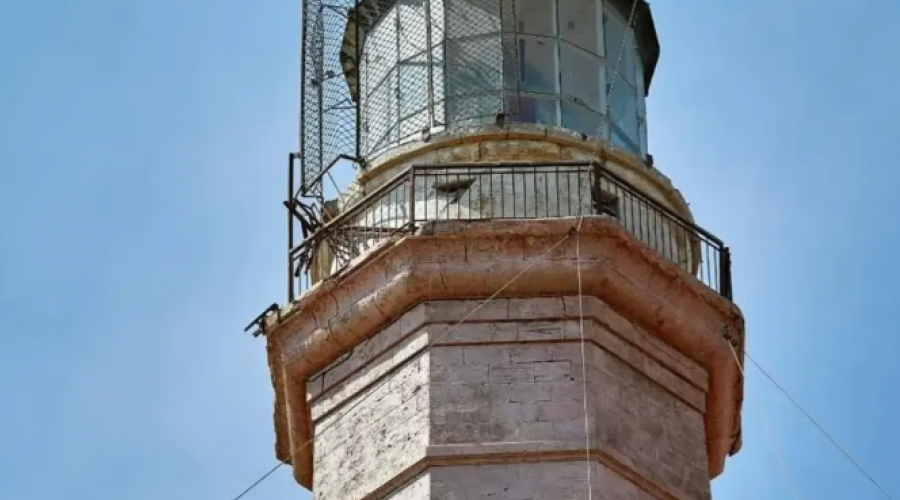
Chilov's history is also connected with maritime navigation. For centuries, shipping routes, lighthouses and coastal settlements played an important role in trade, transportation and communication across the Caspian Sea. Historical accounts associate the island with the construction of a lighthouse in 1800, highlighting its significance in the region's maritime history.
However, one of the most transformative periods in Chilov's development began with the expansion of Azerbaijan's offshore oil industry.
Commercial oil production on the island began in 1948, marking a new chapter in its economic and social development. Over the following decades, Chilov became closely associated with Azerbaijan's offshore petroleum industry.
Today, one of the island's distinctive characteristics is the coexistence of industrial activity and a resident community. Housing, educational facilities and social infrastructure reflect the fact that Chilov is not simply an industrial location but also a place where people live and maintain their everyday routines.
This raises an interesting question from a tourism perspective: how could the history and lifestyle of an island shaped by the sea and industry be introduced to visitors?
Chilov's Natural Environment: Is There Potential for Ecotourism?
The natural environment of Chilov Island deserves particular attention.
A scientific study published in 2025 examined the island's wild vegetation. Researchers collected herbarium specimens representing 21 plant species and investigated the distribution and adaptation of vegetation under challenging environmental conditions, including areas affected by oil production and pollution.
The research demonstrates that Chilov is not only relevant to industrial and maritime history but also offers opportunities for scientific and ecological investigation.
Nevertheless, ecotourism must be approached carefully. It is not simply about showcasing natural landscapes. Genuine ecotourism prioritises environmental protection, responsible visitor management and education.
If an ecological tourism programme were considered for Chilov, potential areas of interest could include:
Studying the coastal ecosystems of the Caspian Sea;
Introducing visitors to the island's vegetation and plant adaptation;
Educational programmes about marine environmental protection;
Scientific expeditions and university research initiatives;
Exploring the environmental impact of human and industrial activities.
The objective should not be to increase human interference with the natural environment, but to help visitors understand the ecological characteristics and challenges of the Caspian region.
What Unique Tourism Experiences Could Chilov Island Offer?
In my view, limiting Chilov's future tourism potential to a single category would be a missed opportunity.
The island could be introduced through a distinctive destination concept combining several complementary tourism experiences.
1. Industrial Heritage Tourism – Discovering Azerbaijan's Oil History
Azerbaijan occupies a significant place in the history of the global petroleum industry. The development of Baku's oil fields, early oil production, the expansion of offshore extraction and the remarkable Neft Dashlari settlement are important chapters in the country's economic and industrial history.
Chilov represents another part of this story.
Around the world, former industrial sites have been transformed into cultural, educational and tourism destinations. One notable example is the Zollverein Coal Mine Industrial Complex in Essen, Germany. Once a major centre of coal production, it has been transformed into a recognised industrial heritage destination featuring museums, exhibitions and cultural activities.
A similar approach, adapted to Chilov's specific circumstances, could be considered.
Potential initiatives might include:
An exhibition dedicated to the history of Azerbaijan's offshore oil industry;
Multimedia displays featuring historical photographs, maps and archival documents;
Documentary screenings exploring the lives and work of oil industry employees;
Educational tours focusing on industrial heritage;
Special learning programmes for students of geology and petroleum engineering.
Of course, operational industrial facilities cannot automatically be considered suitable for tourism. Any such programme would require official authorisation, comprehensive safety assessments and clearly designated visitor areas.
2. Maritime Heritage Tourism – Exploring the History of the Caspian Sea
Chilov's maritime heritage could become the foundation of another distinctive tourism product.
In various parts of the world, historic lighthouses are preserved not only as navigational structures but also as cultural heritage attractions.
Scotland's lighthouse heritage, Norway's coastal routes and maritime museums around the Baltic Sea demonstrate how maritime history can be transformed into engaging visitor experiences.
A similar concept could be explored for Chilov through:
A small maritime heritage exhibition;
Interactive presentations about lighthouses and Caspian navigation;
Historical shipping maps and maritime archives;
Educational programmes about the geography and maritime routes of the Caspian Sea;
Photography and documentary projects focused on the island's maritime identity.
If the historical lighthouse and its surrounding area are found to be accessible and safe, a dedicated heritage route could also be considered.
3. Community-Based Tourism – Discovering the People and Life of Chilov
One of the most meaningful aspects of tourism is not always a monument or a landscape. Sometimes, it is the story of the people who live in a particular place.
Chilov's distinctive settlement and lifestyle could provide an interesting foundation for community-based tourism.
Imagine a future visitor programme in which guests learn not only about the island's history but also about the everyday experiences of its residents, their relationship with the sea, their working traditions and the social environment that has developed over generations.
This could create a more authentic and meaningful experience than a conventional sightseeing excursion.
Potential initiatives include:
Video interviews with local residents;
Collecting oral histories and establishing a digital archive;
Photography exhibitions documenting everyday island life;
Cultural presentations developed with community participation;
Opportunities for local residents to participate in guiding, hospitality and small tourism businesses.
An essential principle should be that residents are not simply part of the scenery for visitors. They should be active participants, partners and direct beneficiaries of tourism development.
4. Photography and Documentary Tourism – Discovering a Different Side of Azerbaijan
Chilov's industrial landscapes, open sea horizons, residential areas and distinctive Caspian atmosphere could offer interesting opportunities for photographers, documentary filmmakers and creative travellers.
Around the world, industrial landscapes, historic ports and former production sites have become subjects of photography tourism and creative exploration.
Subject to appropriate permissions and safety arrangements, Chilov could potentially support:
Industrial heritage photography tours;
Documentary photography projects about everyday Caspian life;
Film and documentary production;
Visual projects comparing historical and contemporary Chilov;
Special creative programmes for international photographers.
Such initiatives could also contribute to the island's visibility in international media.
5. Scientific and Educational Tourism – An Outdoor Learning Environment
Scientific tourism could become another important element of Chilov's future potential.
For students and researchers working in geology, ecology, botany, geography, maritime studies and industrial history, the island offers an interesting setting for research and educational activities.
Potential programmes could include:
Educational visits organised by universities;
Environmental monitoring and observation projects;
Seminars on the Caspian Sea ecosystem;
Educational programmes on geological heritage and petroleum history;
International scientific cooperation initiatives.
The objective would not be mass tourism, but carefully managed educational visits involving small groups of researchers, students and specialists.
International Experience: How Can Small Islands and Industrial Heritage Become Tourism Destinations?
When considering Chilov's future, international experience offers valuable lessons.
Around the world, there are islands and industrial territories whose tourism value is based not on large hotels or entertainment complexes, but on their distinctive history, geography, cultural heritage and local communities.
Zollverein – Germany
The Zollverein Coal Mine Industrial Complex in Essen demonstrates how former industrial facilities can become important destinations for heritage tourism, education, museums and cultural activities.
Its experience illustrates how industrial history, when properly preserved and interpreted, can become a valuable contemporary tourism product.
Symi Island – Greece
The Greek island of Symi offers an interesting example of how traditional settlements, maritime heritage and local identity can contribute to cultural tourism.
Research and heritage initiatives involving the island also demonstrate the value of connecting historical industrial activities with cultural routes and community identity.
Palau – Pacific Ocean
Palau provides an important example of environmentally responsible tourism. Its Palau Pledge initiative encourages visitors to recognise their responsibility towards the natural environment and local culture.
This approach demonstrates how environmental awareness can become an integral part of a destination's identity.
Magdalen Islands – Canada
The Magdalen Islands offer another interesting perspective on island tourism, with their distinctive coastal landscapes, local communities and regional identity.
Their experience highlights the importance of considering tourism not merely as a way to increase visitor numbers, but as an economic activity that can support local communities and preserve cultural heritage.
These examples are not ready-made models for Chilov. Each destination has its own geographical, environmental and social conditions.
However, they demonstrate an important principle: every island needs a tourism strategy that reflects its own identity, heritage and local community.
What Tourism Concept Could Be Developed for Chilov Island?
My recommendation would be to avoid positioning Chilov as a conventional mass-tourism destination.
Instead, the island could initially be considered for a specialised tourism concept based on limited visitor numbers, educational experiences, heritage interpretation and responsible destination management.
One possible concept could be:
CHILOV ISLAND – The Hidden Heritage of the Caspian Sea
This concept could be developed around five complementary experiences.
1. Chilov Heritage Experience
A guided introduction to the island's history, historical names, maritime heritage and the development of Azerbaijan's offshore oil industry.
2. Caspian Maritime Experience
Educational programmes exploring the maritime history of the Caspian Sea, lighthouses, shipping routes and navigation.
3. Island Life Experience
A cultural introduction to the island's residents, their everyday lives and the relationship between the community and the sea.
4. Caspian Eco & Science Experience
Educational programmes focusing on vegetation, environmental challenges, the Caspian ecosystem and scientific research.
5. Chilov Digital Experience
Virtual tours, interactive maps, historical photo archives, 360-degree visual experiences and documentary content introducing the island to international audiences.
Through this approach, Chilov's tourism offering would not depend entirely on physical visits.
People could discover its history and character remotely, while physical visits could be introduced only when the necessary permissions, transportation arrangements and safety requirements are in place.
What Could a Future Tourism Itinerary for Chilov Look Like?
If the relevant authorities approve access arrangements and suitable transportation and safety measures are established, a specially designed educational day trip from Baku could be considered.
A conceptual itinerary might include:
Departure from Baku using officially authorised maritime transportation;
An introduction to the geography of the Caspian Sea and the history of Chilov;
A guided presentation of the island's historical and industrial heritage;
Photography and observation from designated safe areas;
A multimedia presentation about maritime navigation and Azerbaijan's offshore oil industry;
A cultural introduction to the local community, subject to prior agreement;
Return to Baku.
This is a conceptual tourism proposal rather than an existing bookable tour package. Its implementation would require technical, environmental, operational and safety assessments, as well as formal approval from the relevant authorities and industrial operators.
What Infrastructure and Management Would Be Needed?
The development of tourism on Chilov must begin with a realistic understanding of the island's current conditions.
As an area associated with active industrial operations, Chilov cannot be considered freely accessible to visitors. Industrial safety, restricted access, environmental conditions, transportation and the interests of the local community must all be taken into account.
At the initial stage, rather than investing in large tourism infrastructure, a more practical approach would involve:
A comprehensive assessment of the island's tourism and environmental potential;
Identifying areas that could potentially be designated for safe visitor access;
Establishing cooperation between government authorities, industrial operators and the local community;
Collecting historical materials and creating a digital archive;
Testing a controlled visitor model involving small groups;
Directing part of any tourism-related income towards community development and heritage preservation.
At a later stage, and only if justified by feasibility studies, a small visitor interpretation centre, information point or cultural heritage exhibition could be considered.
The objective should not be to build a new town or a large resort on Chilov. It should be to preserve the island's existing values while creating new cultural, educational and economic opportunities around them.
Chilov Island Could Become More Than a Tourism Destination
Chilov Island remains relatively unknown on Azerbaijan's tourism map. However, limited international visibility should not be confused with a lack of potential.
Its geography and history bring together several themes that could support a distinctive tourism concept: industrial heritage, maritime history, community life, scientific research, environmental education and digital tourism.
I believe Azerbaijan's tourism development strategy should pay greater attention to such lesser-known places.
Tourism is not only about presenting destinations that travellers already recognise. It is also about discovering new places, uncovering their stories and introducing them to the world.
Chilov's value should not be measured by the number of hotels it could accommodate, the length of its beaches or the number of entertainment facilities it might offer.
Its real value lies in its history, its people and the unique way of life that has developed in the middle of the Caspian Sea.
Perhaps, in the future, one of the most memorable experiences for visitors to Azerbaijan will be discovering the story of this small island, starting from Baku and travelling beyond the country's familiar tourist routes.
Because sometimes, to truly understand a country, we need to explore not only its most famous cities, but also the places whose stories have yet to be widely told.
Chilov Island is one of those stories Azerbaijan deserves to share with the world.
Do you think Chilov Island could become one of Azerbaijan's distinctive alternative tourism destinations?