
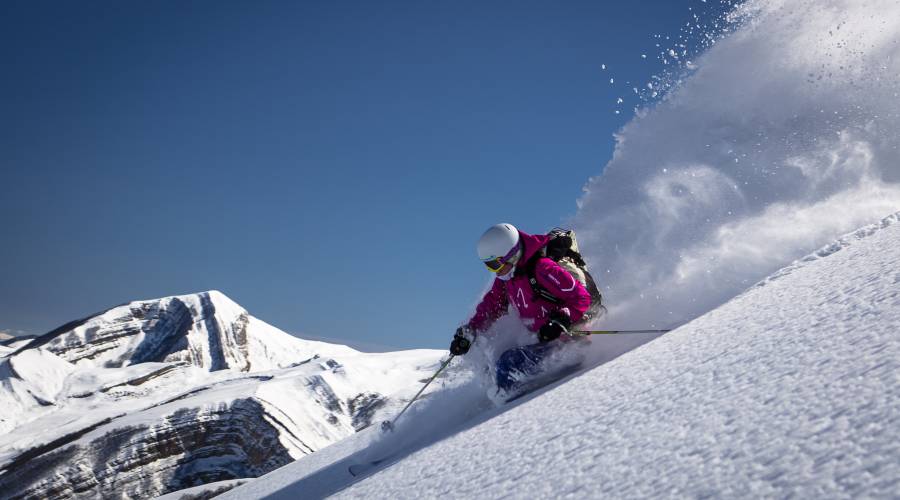
The Call of the White Peaks: How Could Shahdag Shape Azerbaijan’s Global Tourism Story in 2027?
The 2027 ISMF World Championships in Ski Mountaineering at Shahdag can be more than an international sporting event—it can become an important milestone for Azerbaijan’s winter tourism. Beyond the competition itself, the event has the potential to inspire a new generation, strengthen hospitality standards, create opportunities for local businesses, and introduce international visitors to the culture, nature, cuisine, and people of northern Azerbaijan. For me, the real success will not be measured only by medals or visitor numbers, but by the legacy left behind: new opportunities for people, stronger tourism communities, and a lasting culture of winter sports in Azerbaijan. The mountains are ready. The next chapter is ours to create.
After many years working in tourism and hospitality, I have come to understand that major international events should never be measured solely by the number of visitors they attract, the rooms they sell, or the economic activity they generate during a few days of competition.
Their true value lies in something much more enduring: the opportunities they create for people, the destinations they bring to the world’s attention, the standards they inspire, and the legacy they leave for future generations.
From this perspective, the planned hosting of the ISMF World Championships in Ski Mountaineering at Shahdag Mountain Resort in 2027 represents an important opportunity for Azerbaijan to strengthen its position in international winter tourism.
For me, the most compelling question is not simply how successfully Azerbaijan will host a major sporting event, but what this event could mean for the country, its tourism industry, its regional communities, and its people.
Shahdag: Beyond a Winter Resort
Over the past decade, Shahdag has developed into one of Azerbaijan’s principal mountain tourism destinations. Its mountain landscapes, ski slopes, modern facilities, and growing range of recreational activities have helped establish a foundation for the development of winter tourism.
However, infrastructure alone does not create an internationally recognised destination.
A destination becomes truly competitive when its infrastructure is supported by professional hospitality, reliable services, distinctive experiences, effective international promotion, and a clear long-term vision.
Hosting a major international sporting championship can help bring these elements together.
It creates an opportunity to demonstrate Azerbaijan’s capacity to welcome international visitors, coordinate complex tourism operations, deliver consistent service standards, and offer an experience that extends beyond the sporting venue itself.
For the hospitality industry, this means looking at the entire visitor journey: from the moment a traveller discovers Azerbaijan to the moment they return home and share their experience with others.
Every interaction matters. Every service contributes to the destination’s reputation.
And sometimes, the most powerful impression a country leaves is not created by a spectacular landscape, but by the warmth, professionalism, and genuine hospitality of its people.
The Human Dimension of Winter Tourism
When discussing international sporting events, we often focus on infrastructure, investment, visitor numbers, and media exposure. These are important indicators, but I believe there is another dimension that deserves equal attention: the impact on people.
Winter sports are still developing their place within Azerbaijan’s broader sporting culture. An international championship can help make these activities more visible, accessible, and appealing to a wider audience.
Imagine a child visiting Shahdag with their family, watching professional athletes navigate challenging mountain terrain, and discovering skiing or ski mountaineering for the first time.
That experience could become much more than a memorable family outing.
It could inspire a new interest in sport, encourage a young person to join a ski school, or introduce an entirely new ambition into their life.
Not every child who discovers a sport will become a professional athlete. Nor does that need to be the measure of success.
The greater achievement may be the development of a generation that feels more connected to the mountains, values an active lifestyle, appreciates nature, and sees new possibilities for its future.
Sometimes, the most important legacy of a sporting championship is not the medal ceremony. It is the moment someone discovers a passion they never knew they had.
This is why investment in youth participation, accessible training opportunities, qualified instructors, and community engagement should be considered an essential part of the wider winter tourism strategy.
Turning an International Event into a Lasting Tourism Legacy
From a tourism and hospitality perspective, an international championship offers opportunities that extend far beyond the duration of the competition.
Athletes, coaches, officials, journalists, sponsors, and spectators all contribute to an international audience that will experience Azerbaijan through different perspectives.
Their expectations will extend beyond the sporting facilities.
They will experience hotels, restaurants, transportation, visitor information, digital booking services, local excursions, and the quality of communication throughout their stay.
This creates an opportunity to strengthen professional standards across the hospitality ecosystem, from hotel operations and food and beverage services to destination management, logistics, customer experience, and multilingual visitor support.
It also highlights the importance of collaboration between hotels, tour operators, transport providers, local businesses, destination management organisations, and public institutions.
A successful destination is rarely built by one organisation working alone. It is the result of an interconnected system in which each participant contributes to the visitor experience.
For Azerbaijan, the objective should therefore extend beyond delivering a successful championship. It should include using the event as a catalyst for stronger partnerships, better-trained professionals, improved service quality, and tourism products that remain commercially viable long after the final competition.
Connecting Shahdag with the Wider Northern Region
One of the greatest opportunities lies in connecting Shahdag with the broader tourism potential of Gusar and northern Azerbaijan.
The region offers much more than mountain scenery. Its cultural heritage, local cuisine, traditional communities, distinctive landscapes, and rural experiences can enrich the overall visitor journey.
International visitors travelling to Shahdag should have compelling reasons to explore beyond the resort.
A well-designed itinerary could combine winter sports with local culinary experiences, guided village visits, cultural encounters, nature-based activities, and excursions to other attractions in the region.
Such an approach can create value for a wider range of businesses, including family-owned accommodation, restaurants, local guides, transport providers, artisans, and small tourism enterprises.
This is particularly important because tourism development should not be measured exclusively by the number of visitors arriving at a resort.
We should also consider how much of that economic activity reaches the surrounding communities, how many local businesses benefit, and how effectively tourism creates sustainable employment opportunities.
The real potential of Shahdag is not limited to attracting visitors to the mountains. It lies in helping those visitors discover the wider story of Azerbaijan.
When local communities become active participants in tourism development, they are not simply providing services to visitors. They become ambassadors of their own culture, traditions, and way of life.
That is how a destination develops an identity that cannot easily be replicated elsewhere.
Azerbaijan’s International Image in the Digital Age
In today’s tourism landscape, international visibility is increasingly shaped by digital platforms, travel publications, social media, online reviews, and AI-powered travel discovery tools.
A major international sporting event can generate significant attention, but attention alone does not guarantee lasting tourism growth.
The real opportunity lies in converting visibility into interest, interest into travel decisions, and travel decisions into positive visitor experiences.
This requires a coordinated digital strategy before, during, and after the event.
Professional destination content, multilingual information, accessible booking channels, engaging visual storytelling, and clear travel itineraries can help potential visitors understand what Azerbaijan offers beyond the championship.
Equally important is the content created organically by athletes, spectators, journalists, and travellers themselves.
A photograph of a snow-covered mountain, a positive hotel experience, a local dish discovered in Gusar, or a memorable conversation with a resident can inspire future travellers in ways that conventional advertising alone may not achieve.
The strongest destination brands are built when the promise communicated online is matched by the experience delivered in real life.
For Azerbaijan, this is an opportunity to position winter tourism as a meaningful part of the country’s wider tourism identity, alongside its cultural heritage, history, gastronomy, nature, and hospitality.
What Should Remain After the Championship?
For me, this is the most important question.
The success of an international event should not be assessed only during the days it takes place. Its longer-term impact deserves equal attention.
What happens after the athletes leave?
Will more young people have access to skiing lessons and winter sports programmes?
Will local tourism businesses have developed new products and established international partnerships?
Will hospitality professionals have gained valuable experience in managing international events?
Will visitors have discovered destinations beyond Shahdag?
Will Azerbaijan have strengthened its reputation as a destination for mountain tourism throughout the winter season?
And will the surrounding communities see tangible, lasting benefits?
These are the questions that can help distinguish a successful event from a successful long-term tourism strategy.
Achieving these outcomes requires planning, cooperation, investment in people, and a commitment to measuring results beyond immediate visitor numbers.
It also requires recognising that tourism is not simply an industry built around places. It is an industry built around people: the people who welcome visitors, the people who create experiences, and the people whose lives and livelihoods can be improved through responsible tourism development.
My Perspective: A New Chapter for Azerbaijan’s Mountain Tourism
After years of working in tourism and hospitality, I believe Azerbaijan’s mountain destinations have the potential to play a much more significant role in the country’s international tourism offering.
Our mountains are not merely beautiful landscapes. They are places where sport, nature, culture, hospitality, and regional development can come together.
Shahdag provides an important platform for demonstrating that potential to the world.
The 2027 championship can become a meaningful milestone in this journey, provided that the focus extends beyond the event itself and towards the opportunities it creates for the future.
Ultimately, the legacy of a major sporting event is not defined only by the quality of its organisation or the attention it receives internationally.
It is also defined by the young people it inspires, the local businesses it supports, the professional standards it strengthens, the communities it connects, and the memories visitors carry home with them.
Perhaps, years from now, we will look back on the winter of 2027 and remember it not only as a moment when Azerbaijan welcomed the international ski mountaineering community, but as a period when a broader interest in winter tourism began to take shape.
That would be a legacy worth pursuing.
The mountains are ready to tell their story. Our responsibility is to ensure that the world discovers not only the beauty of Shahdag, but also the people, culture, and hospitality that make Azerbaijan unique.
What kind of legacy would you like to see Shahdag leave for Azerbaijan’s next generation?